
So I got this book a while back, yes about 2 years ago and have not flipped open a page since then but my quest for great communication and how to deal with people / negotiate in the workplace got me to wipe off the dust from this book “Getting to YES” just last month.
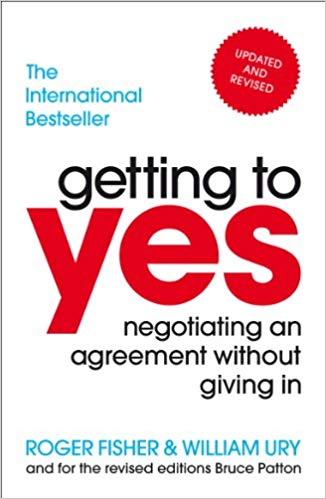
I will be writing a number of series on how much this book has influenced me and how best I have put them in practice. Unfortunately I am not a book lover or even like reading books but I prefer to read articles and other useful materials off the internet. But in my life time two books have changed the way I think, communicate, work and handle people, one of which is Getting to YES.
I have found this book to be an eye opener of things I already know, ironically. As the author said, the aim of this book is to organise common sense and common experience in a way that provides a usable framework for thinking and acting and also to make you aware of what you already know and guide you on how best to put them to practice which is so true of what I have experienced.
Reading this book has made me appreciate books in general and also appreciate my taste of good things (me being able to buy this book in the first place).
As I round up reading this book, I am already in search of my next book which I hope will intrigue me as much as this has.
Working in a project environment, we always compete for scarce resources (funding/cost), human skills, workspace, software environment, etc as project teams negotiate for priority to get things done to meet deadlines.
Getting to YES has elevated my thinking from the ordinary human reasoning to that of an extra ordinary; to be cautious of not just my needs but that of others, to show interest in other people’s problems and proffer solutions as my own, to negotiate based on interest, facts and principle, rather that position, ok let me explain.
My project team, 70% of the time share software testing environment with other teams and so we tend to debate and present how important our changes are to senior stakeholders so they decide on which team to monopolise the testing environment for a period of time. I, as the negotiator of my team always present, like my opposing team negotiator will, reasons why my team should have the environment but this time my opponent won as their reasons for taking hold of the testing environment superseded mine. As my team had to live without the testing environment for about a week (stopping us from testing), that was the same week I started reading Getting to YES. I came across an example in this book about how you as a negotiator should take interest in the other party’s problem. So on getting to the office the next day, I asked how much time the opposing team need to hold on to the testing environment and the answer was that they do not know as they have to carry out some activities before my team will be in a position to test. So I asked the technical lead of the opposing team what really the problem was as they don’t seem to be making much progress, so she explained to me what the issue was and what they are trying to achieve (that was me showing interest in their problem) after which I left as it was not something I could help resolve. Ten minutes later, the technical lead came to me saying they think they have found a way of by-passing some of the activities and my team will be able to start our testing once they have completed just one out of the five activities initially planned for.
This singular act of me just getting interested in the other teams problem made it possible for them to give the problem a closer look and a deeper thought on how they can remove the impediment which was in turn blocking my team from achieving their goal.
Look out for more series of my winnings in the work place with Getting to YES
#GettingtoYES #RogerFisher #WilliamUry #GreatestBookofAllTime #InternationalBestseller #Negotiation #Motivation #SayNoToPositionalBargaining i


